
Is SEO Worth It for a Small Business in India? An Honest Business Case
Every day people in India open Google and type 'best CA near me', 'interior designer in Lucknow', 'wholesale kurti supplier'. Somebody gets that enquiry. Usually it is one of the first three or four results.
That is the entire argument for SEO, and it is genuinely strong. What makes it a difficult purchase is everything around it: it takes months, the market is full of people selling things that do not work, and it is nearly impossible for a business owner to tell a good provider from a bad one before spending the money.
So this guide is not about how to rank - our SEO playbook covers the actual techniques. This one is about the decision. What it costs, when it pays back, what you are actually buying, how to judge whoever you hire, and the cases where the honest answer is that you should not buy SEO at all right now.
What's in this guide
- 1The one-line case for SEO
- 2The economics: why the cost falls
- 3What SEO work actually consists of
- 4What it costs in India
- 5A realistic timeline
- 6How to judge an SEO provider
- 7What to ask for in the first month
- 8When SEO is the wrong purchase
- 9Doing the first part yourself
- 10A worked example: a chartered accountancy firm
- 11Frequently asked questions
The one-line case for SEO
Someone searching 'wholesale kurti supplier in Jaipur' has already decided to buy. They are not being persuaded, interrupted or entertained. They have a need and they are looking for someone to solve it.
No other marketing channel puts you in front of that person at that moment. Social media reaches people who were not thinking about you. Advertising reaches the same searchers but charges per click, forever. SEO puts you there and keeps you there.
Three consequences follow, and they are the whole business case:
The traffic has intent. Enquiries from search convert better than enquiries from almost any other channel, because the person came looking.
It does not stop when you stop paying. A page that ranks keeps working next month and next year. Advertising ends the moment the card is declined.
It compounds. Every page you add makes the site stronger, and older pages tend to rank better as they age. The work you did in month three is still paying in year two.
The catch, and it is a real one: none of this happens quickly. Which is why the timeline question matters more than any other.
The economics: why the cost falls
The clearest way to compare SEO with advertising is effective cost per lead over time, holding monthly spend equal.
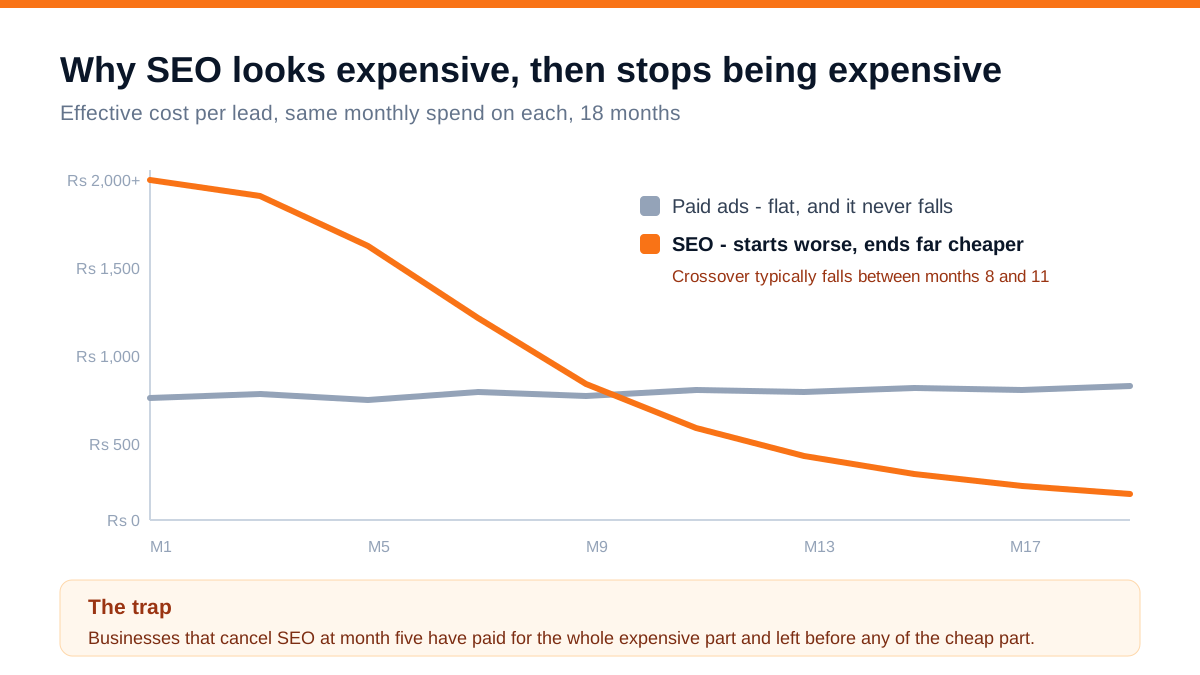
Paid advertising produces leads from day one at a cost that stays roughly flat - and in competitive Indian categories, drifts upward year on year as more businesses bid.
SEO in month one produces almost nothing, so the effective cost per lead is enormous. By month five it is improving. Somewhere between months eight and eleven the two lines cross, and after that SEO keeps getting cheaper while advertising does not.
This produces the single most expensive mistake in the subject: cancelling at month five. At that point you have paid for the entire expensive part and left before any of the cheap part. It would genuinely have been better never to start.
It also explains why the right answer for most small businesses is both, not one. Advertising pays the bills while SEO builds. Our guide to marketing ROI covers how to hold both in one budget.
What SEO work actually consists of
Part of why SEO is easy to sell badly is that most buyers have no idea what the work is. Here is the whole of it.
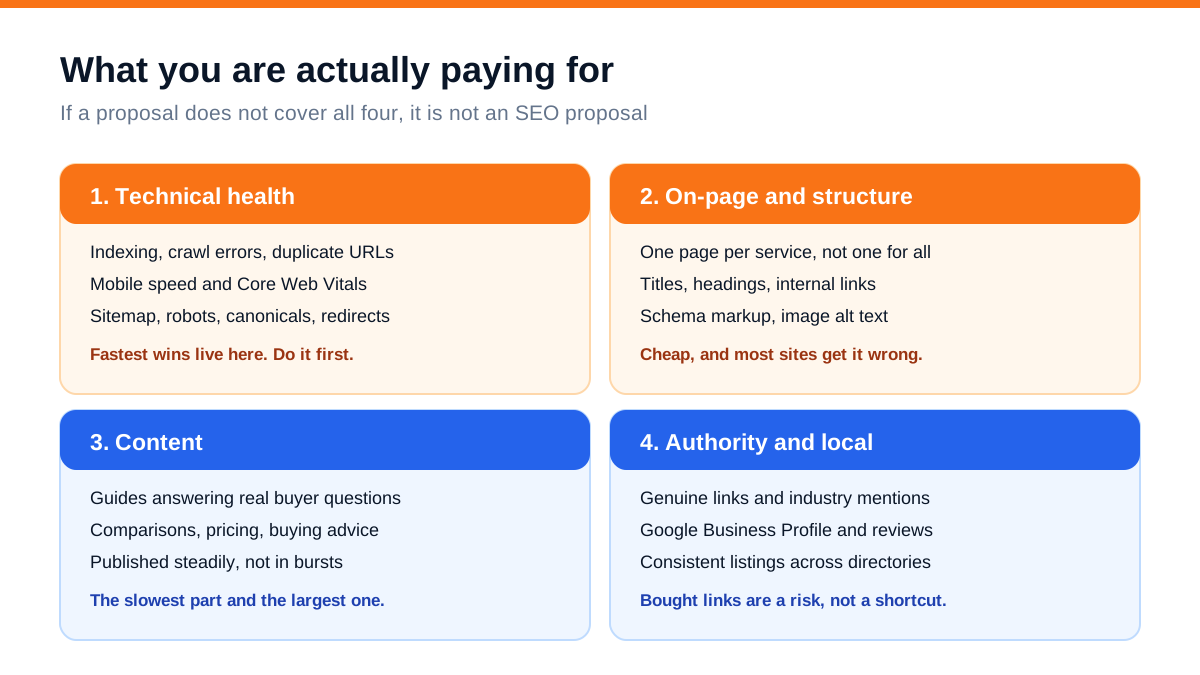
Technical health. Indexing problems, crawl errors, duplicate URLs, mobile speed, Core Web Vitals, sitemaps, canonicals, redirects. Unglamorous, and this is where the fastest wins usually are - a site with pages that are not indexed at all cannot be fixed by any amount of writing.
On-page and structure. One page per service instead of one page listing all of them. Titles, headings, internal links, schema markup, image alt text. Cheap to fix and wrong on most small business sites.
Content. Guides that answer the questions your buyers actually ask, comparisons, pricing explanations, buying advice - published steadily rather than in bursts. This is the slowest part and the largest.
Authority and local signals. Genuine links and industry mentions, your Google Business Profile, reviews, consistent listings across directories. Bought links are a risk rather than a shortcut, whatever the seller claims.
If a proposal covers only one of these - usually content, occasionally links - it is not a complete SEO engagement and it will underdeliver.
What it costs in India
Ranges vary by city and competition, but these bands hold for most small business work:
- A one-time technical audit and fix - Rs 15,000 to Rs 50,000. Often the best first purchase, because it tells you what is actually wrong before you commit to anything ongoing
- Ongoing local SEO for a single-city business - Rs 12,000 to Rs 30,000 a month
- Ongoing SEO with content for a competitive category - Rs 25,000 to Rs 75,000 a month
- E-commerce SEO - Rs 30,000 to Rs 1,00,000 a month, scaling with catalogue size
Two warnings about the bottom end. Anything advertised at Rs 3,000 to Rs 5,000 a month for 'complete SEO' is either doing nothing or building spam links that will cause a problem later. And beware packages priced per keyword - it is a sales structure, not a way of working, and it encourages targeting easy keywords nobody searches.
The useful test is not whether a price feels high. It is whether the expected number of customers, at your margin, justifies it. If a customer is worth Rs 40,000 to you, Rs 25,000 a month needs less than one extra customer a month to break even. If a customer is worth Rs 900, the arithmetic is very different.
A realistic timeline
Anyone who gives you a shorter version of this is either inexperienced or selling.
Months 1-2. Audit, technical fixes, site structure, page-per-service work, Google Business Profile. Expect almost no traffic change. What you should see is fixed indexing problems and improved speed - measurable, but not yet revenue.
Months 3-4. Early movement on low-competition and long-tail searches. Impression counts in Search Console rise before clicks do; a rising number of ranking keywords is the earliest honest signal that it is working.
Months 5-8. Traffic becomes visible. Enquiries start arriving. This is where most businesses either see the point or cancel.
Months 9-12. Competitive terms start moving. Cost per enquiry from search falls below your paid channels.
Year 2 onwards. Compounding. The cheapest leads in the business, provided the work continued.
Faster in a small town with weak competition. Slower in a crowded metro category. But no honest version of this timeline has meaningful revenue in month two.
How to judge an SEO provider
This is where most small business money is lost - not on SEO, but on people selling something else and calling it SEO.
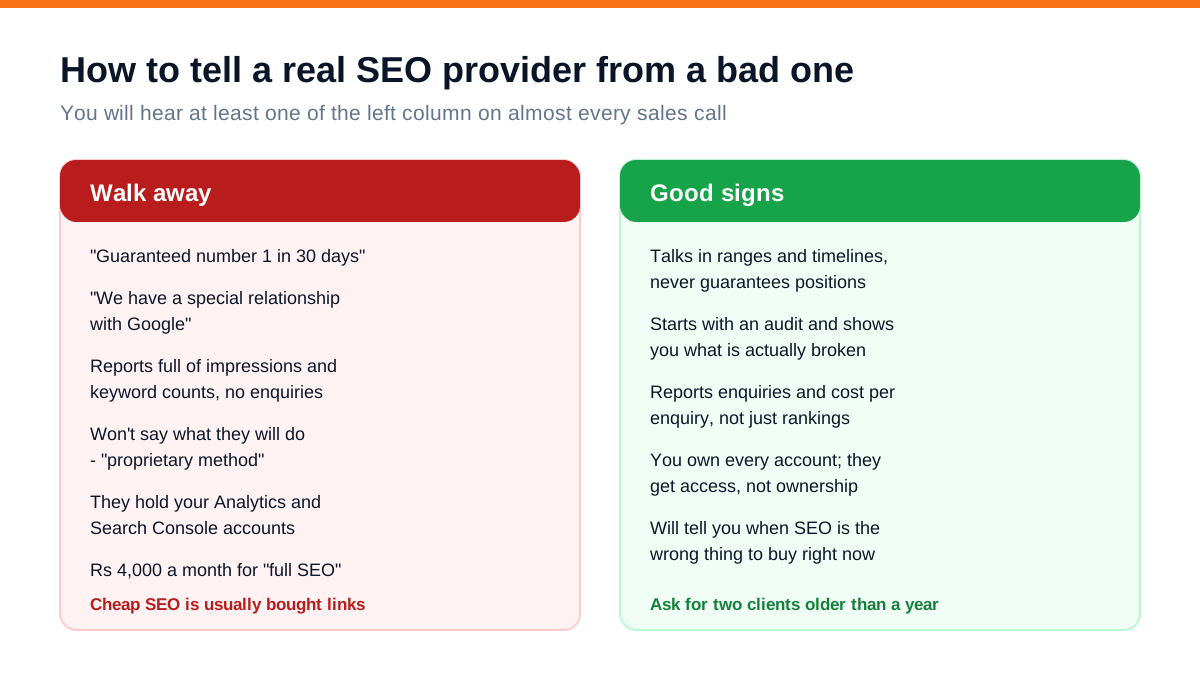
Guaranteed rankings are the clearest signal to leave. Nobody controls Google's results. A guarantee is either meaningless or attached to keywords nobody searches. 'Number one in thirty days' is not ambition, it is a warning.
Anyone claiming a relationship with Google is lying. There is no such thing. Google Partner status exists for advertising, not for organic rankings.
Reports that lead with impressions and keyword counts are hiding the absence of enquiries. Insist on enquiries and cost per enquiry from organic traffic, monthly.
'Proprietary method' means they will not tell you what they do. A real provider will happily explain the plan, because the work is not secret - the execution is what varies.
Account ownership is non-negotiable. Google Analytics, Search Console, your domain, your hosting, your Business Profile - all in your name, with the agency given access. Providers who hold these accounts leave with your data and your history.
The strongest green flag we know: a provider who tells you SEO is the wrong purchase right now and suggests fixing your Google Business Profile or your website first. It costs them the sale and it is almost always the correct advice.
Ask for two clients they have worked with for more than a year, and speak to them. Anyone can show a good first quarter.
What to ask for in the first month
Whoever you hire, insist on these five things before work starts. They cost nothing and they prevent most bad outcomes.
- 1A written audit listing what is broken, in priority order, with reasons. If they cannot produce this, they do not know your site
- 2A baseline snapshot - current organic traffic, current ranking keywords, current mobile speed, current enquiries. Without this you can never prove whether the money worked
- 3A named list of target keywords and which page will target each. Vague 'we will improve visibility' is unmanageable
- 4Confirmation in writing that you own every account, with the agency added as a user
- 5A monthly report format agreed in advance, including enquiries and cost per enquiry, not only rankings
And one for yourself: decide now what you will judge at month nine, and write it down. Businesses that do not set this in advance tend to cancel on a feeling in month five.
When SEO is the wrong purchase
Being straight about this is more useful than selling it.
You need customers this month. SEO cannot do that. Run Google Ads, complete your Google Business Profile, and start SEO alongside once cash flow allows.
You cannot commit nine months. Stopping at month four wastes the entire spend. It is better not to begin.
Your website is broken. Sending search traffic to a slow or confusing site wastes it. Fix the website first - it also improves every other channel simultaneously.
Your Google Business Profile is empty. For a local business this is free, works within weeks, and outperforms early SEO. Do it first, always.
Nobody searches for what you sell. Genuinely new categories have no search demand yet. You need to create awareness before you can capture intent, which is a social and content problem rather than an SEO one.
Enquiries currently wait a day for a reply. More traffic into that will produce more lost enquiries, at greater cost.
Doing the first part yourself
You can do a meaningful amount before hiring anyone, and it makes you a much better client afterwards.
- Set up Google Search Console and Analytics. Free, half an hour, and it is the only way anyone can measure anything later
- Complete your Google Business Profile properly - every service listed, thirty photographs, all attributes, and a review habit
- Give every service its own page. The single most valuable structural fix on most small business sites
- Write your ten most-asked customer questions as ten pages. You already know them; they are in your WhatsApp
- Compress every image on your site. Usually the largest speed gain available and it takes an afternoon
- Publish your prices, or at least ranges. Indian buyers search for price constantly and very few competitors answer
Do those six and you will have done more than many paid engagements deliver in three months - and you will be able to tell whether the next person you hire knows more than you do.
A worked example: a chartered accountancy firm
A four-partner CA firm, mostly referral-led, wanted to reduce dependence on word of mouth. Their site had five pages: home, about, a single 'Services' page listing eleven services, contact, and a careers page nobody visited. Organic traffic was about 140 sessions a month, essentially all brand searches.
They had previously paid Rs 6,000 a month to a provider for eight months and received keyword-ranking reports and no enquiries. The provider held their Analytics account.
The work, over nine months:
- Accounts moved into the firm's own name. Baseline recorded
- Technical audit: 34 pages were not indexed because of a stray robots directive left from a staging site. This single fix, in week two, was the largest contributor to everything that followed
- The 'Services' page became eleven separate pages - GST registration, income tax filing, company incorporation, audit, and so on - each with what it covers, who it is for, timelines and a fee range
- Google Business Profile completed, with all services listed and a review habit at the point of filing
- One article a fortnight answering questions clients actually ask - deadlines, penalties, which structure to register under
Results. Month 3: organic sessions 390, four enquiries. Month 6: 1,450 sessions, 19 enquiries. Month 9: 3,880 sessions, 41 enquiries a month, of which 12 became clients. Cost was Rs 28,000 a month.
By month nine the effective cost per new client from search was around Rs 21,000, against an average first-year client value well above that and clients who typically stay for years.
The instructive part is the robots directive. Eight months and Rs 48,000 had been spent with a provider who never noticed that a third of the site was invisible to Google. That is what buying SEO badly looks like, and it is common.
SEO is an excellent investment and a terrible emergency purchase. If you can wait nine months, it becomes the cheapest source of customers you have. If you cannot, buy advertising and start SEO when you can.
Frequently asked questions
Is SEO worth it for a small business in India?
For most businesses whose customers search online before buying, yes - provided you can commit nine to twelve months. Search traffic arrives with intent, converts better than most channels, and gets cheaper over time rather than more expensive. It is not worth it if you need customers this quarter, cannot sustain the commitment, or your website and Google Business Profile are not yet in order.
How much does SEO cost in India?
A one-time technical audit and fix typically runs Rs 15,000 to Rs 50,000. Ongoing local SEO for a single-city business is usually Rs 12,000 to Rs 30,000 a month, and Rs 25,000 to Rs 75,000 a month for competitive categories with content. Packages advertised at Rs 3,000 to Rs 5,000 a month are either doing nothing or building spam links that cause problems later.
How long does SEO take to work?
Expect little change in months one and two, early movement on long-tail searches by months three and four, visible traffic and enquiries between months five and eight, and competitive terms moving between months nine and twelve. Anyone promising first-page rankings in thirty days is describing advertising or targeting keywords nobody searches.
How do I know if my SEO agency is doing real work?
Ask for enquiries and cost per enquiry from organic traffic every month, not impressions or keyword counts. Confirm you own your Analytics, Search Console, domain and Business Profile accounts. Ask what specific changes were made this month and why. A provider who cannot answer plainly, or who guarantees rankings, is a problem regardless of the price.
Should I do SEO or Google Ads first?
Google Ads first if you need enquiries within the quarter, since it produces them within days. Start SEO alongside as soon as cash flow allows, because ads stop the moment you stop paying while SEO compounds. Most healthy small businesses run both, with the paid share falling over time as organic grows.
Can I do SEO myself?
You can do a meaningful amount: set up Search Console and Analytics, complete your Google Business Profile, give every service its own page, write your ten most-asked questions as pages, compress your images, and publish price ranges. That covers more ground than many paid engagements deliver in three months, and it makes you far better at judging whoever you hire next.
Where to start
If you take one action from this page, open Google Search Console and look at the page indexing report. Pages that are not indexed cannot rank, and a surprising share of small business sites have some invisible for reasons nobody noticed. That check is free and takes ten minutes.
After that, give every service its own page. It is the structural change that does the most for the least money, and you can do it without hiring anyone.
Our SEO service covers the audit, technical fixes, structure, content and local work described here, and the packages page lists what each level costs so you can do the arithmetic before speaking to us. If you want an honest read on whether SEO is even your priority right now, send us your website - for a fair number of businesses the answer is 'fix these three things first', and we will say so.