
What Is Content Marketing, and Is It Worth It for a Small Business?
Content marketing has a marketing problem of its own. It gets sold as storytelling and brand voice, which makes it sound like something a company does once it has money to spare.
What it actually is, for a small business, is far more ordinary: you write down the answers to the questions your customers keep asking, you publish them where people can find them, and over time those answers bring you customers without you paying for each one.
That is the whole idea. Everything else is execution. This guide covers what it involves, what it realistically costs, how long before it pays for itself, and - importantly - when it is the wrong thing for your business to be doing right now.
What's in this guide
- 1What content marketing actually is
- 2Why it works when advertising gets expensive
- 3The compounding curve, and why most people quit before it
- 4Matching content to where the buyer is
- 5What to actually make, in order
- 6How to find topics without guessing
- 7One article, eight pieces of content
- 8What it costs and what it returns
- 9How to measure it honestly
- 10When content marketing is the wrong choice
- 11A worked example: an industrial supplier
- 12Frequently asked questions
What content marketing actually is
Content marketing is publishing useful material that attracts the people who might buy from you, instead of interrupting people who were not thinking about you.
An advertisement says 'buy our water tanks'. Content says 'here is how to work out what tank size a four-storey building needs, and here is what goes wrong when people get it wrong'. Someone searching that question finds you, learns something, and now associates the answer with your business. When they are ready to buy, you are not a stranger.
In practice, for an Indian small business, content means some mix of:
- Articles and guides on your own website - the foundation, because you own them and they can rank in search
- Short video - reels, YouTube shorts, product and process clips
- Comparisons and buyer's guides - 'X vs Y', 'what to check before buying'
- Case studies - a real job, with the actual problem, what you did and what it cost
- FAQ content on service pages - answering objections where the decision is being made
- Email and WhatsApp updates to people who already know you
The common thread is that every piece is useful on its own. If someone would not be glad they read it, it is an advertisement wearing content's clothes, and it will not work.
Why it works when advertising gets expensive
Nothing is wrong with paid advertising. We run a great deal of it. But it has one structural property that content does not: the moment you stop paying, it stops.
Advertising costs in India have risen steadily for years, and in competitive categories the cost per click can outpace what a customer is worth. When that happens, businesses relying entirely on ads have no second option.
Content behaves differently for four reasons:
It keeps working. An article published in March is still bringing traffic in November, and next March. You paid once.
It arrives with intent. Someone reading 'how to choose an industrial water pump' is much further along than someone who saw a banner. They are looking, not being interrupted.
It builds trust before the conversation. For higher-value purchases, buyers research heavily before making contact. Being the source that taught them shortens the sales conversation dramatically.
It makes everything else cheaper. Content feeds your SEO, your social posts, your emails and your sales replies. The same work is used in five places.
The honest counterweight: content is slow, it demands consistency, and it does nothing for you in month one. Ads work on day one. Most businesses need both, in that order - ads for now, content for the year after.
The compounding curve, and why most people quit before it
This is the single most important thing to understand before starting, because it explains almost every content marketing failure we have seen.
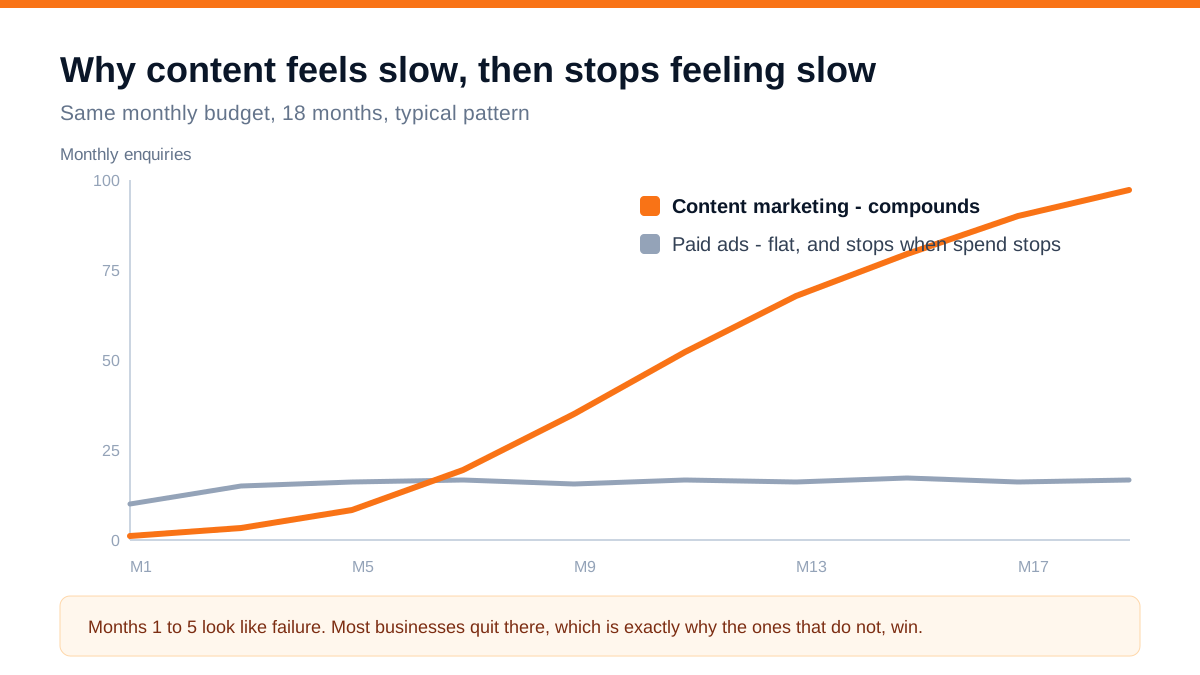
For the first three to five months, content produces very little. Search engines need time to trust new pages, and you have not yet published enough for any of it to add up. If you judge it at month four, it looks like a waste of money.
Then two things happen at once. Your older articles start ranking as they age and gather links, and the sheer number of pages means you show up for many more searches. The curve turns. By month twelve to eighteen, businesses that kept publishing are typically getting more enquiries from content than from their ad spend, at a fraction of the ongoing cost.
The practical consequence: do not start content marketing unless you can commit to nine months. Three months of publishing followed by giving up is genuinely wasted money. One post a week for nine months beats ten posts in one month followed by silence, every time.
Matching content to where the buyer is
The most common structural mistake is making only one kind of content - usually the kind that talks about your product - and wondering why nobody discovers you.
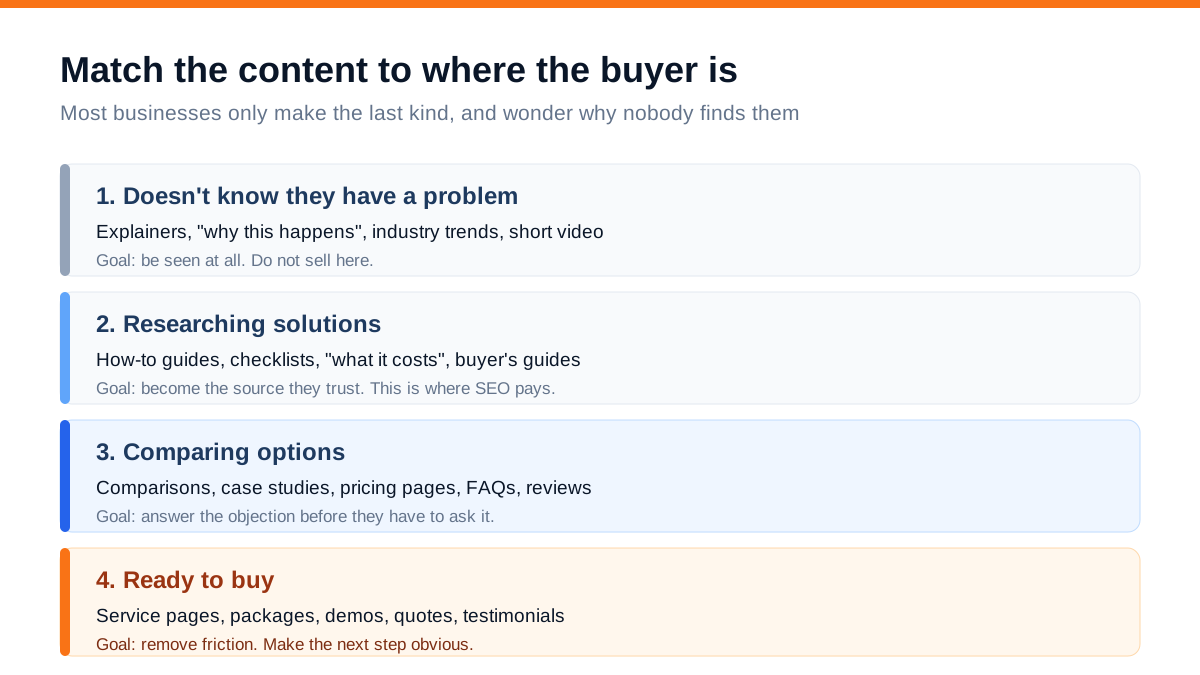
Stage 1 - they do not know they have a problem. Explainers, 'why this happens', industry changes. The goal is to be seen at all. Do not sell here; you will lose them.
Stage 2 - they are researching. How-to guides, checklists, 'what this costs' articles, buyer's guides. This is the largest opportunity and the stage most Indian businesses ignore completely. It is also where search traffic lives.
Stage 3 - they are comparing. Comparisons, case studies, pricing pages, FAQs, reviews. Answer the objection before they have to raise it. Content that names the trade-offs honestly converts better than content that pretends there are none.
Stage 4 - they are ready. Service pages, packages, quotes, testimonials. Remove friction and make the next step obvious.
A useful audit: list everything you have published in the last year and mark which stage each piece serves. If everything is stage four, that is your answer for why traffic is low.
What to actually make, in order
If you are starting from nothing, this order gets you to results fastest.
- 1Fix your service pages first. Before publishing anything new, make sure each service page explains what is included, what it costs or the range, who it is for, and what happens next. Most businesses can double enquiries from existing traffic just by doing this
- 2Write your ten most-asked questions as ten articles. You already know them. They are in your WhatsApp. Each becomes a page that ranks and a link you can send to save yourself typing
- 3Write one 'what it costs' article. Indian buyers search for price constantly and very few businesses publish anything useful about it. Being the one that does is a significant advantage, and it filters out people who were never going to buy
- 4Publish three case studies. A real job: what the customer needed, what you did, what it cost, what happened. Specific beats impressive
- 5Add FAQs to every service page. Six to eight real objections, answered plainly. This helps conversions and can earn you extra visibility in search results
- 6Then keep going, one piece a week. Quality first, but published consistently. An excellent article you never finish is worth nothing
Length matters less than completeness. A 900-word article that fully answers a narrow question beats a padded 3,000-word one. Write until the question is answered, then stop.
How to find topics without guessing
You do not need expensive research tools to start. You need to pay attention to the questions you are already being asked.
- Read your last hundred WhatsApp enquiries. Every question asked more than twice is a topic. This is the single best source and it costs nothing
- Ask your sales or counter staff what customers always want explained. They will have a list ready
- Type your main service into Google and read the 'People also ask' box and the suggestions that appear as you type. Those are real searches
- Read reviews of competitors - the complaints tell you what buyers are anxious about
- Check what your competitors rank for and find the questions they answered badly or not at all
One thing worth being deliberate about: build a few clusters rather than scattering. Six connected articles on one topic, linked to each other, will outperform twenty unrelated ones, because search engines read the group as evidence you know the subject.
One article, eight pieces of content
Small businesses rarely have a content production problem. They have a content recycling problem - they make something once, publish it in one place, and never use it again.
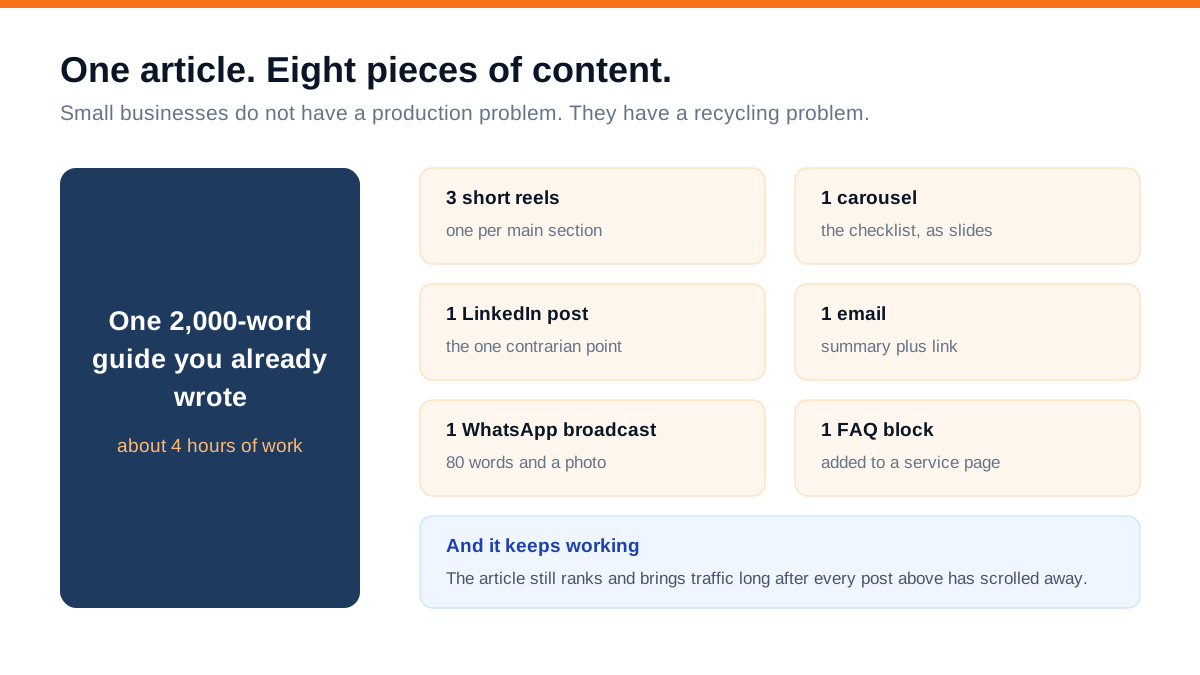
One 2,000-word guide - roughly four hours of work - is also three short reels (one per section), a carousel of the checklist, a LinkedIn post built on its one contrarian point, an email to your list, an eighty-word WhatsApp broadcast, and an FAQ block for a service page.
And unlike the seven derivatives, the article itself keeps working. Every social post has scrolled out of existence within days; the article is still being found next year.
Plan the repurposing before you write, not after. Knowing that section three has to work as a thirty-second video changes how you write section three.
What it costs and what it returns
Real numbers, because most articles on this topic avoid them.
Doing it yourself: roughly four to six hours a week - one article, plus turning it into social posts. The cost is your time, and the constraint is that it is the first thing to get dropped in a busy month.
Hiring it out in India: a competent, researched article typically runs between Rs 3,000 and Rs 12,000 depending on depth and subject complexity. Anything at Rs 500 is spun or generated filler and will do nothing for you - worse, it can drag down the pages that would otherwise have worked. A managed programme with strategy, writing, images and publishing generally sits between Rs 20,000 and Rs 60,000 a month for a small business.
What to expect back: with roughly forty solid articles published over a year in a normal competitive category, a small business typically sees organic traffic move into the low thousands per month and content-attributed enquiries in the range of fifteen to fifty a month by month twelve to eighteen. That is a wide range because it depends heavily on category and competition.
Compare it honestly against ads. If your paid campaigns cost Rs 400 per enquiry and content eventually delivers enquiries at an effective Rs 60 to Rs 150 once amortised, content wins on cost but loses badly on speed. Which is why running both is usually right, not choosing.
How to measure it honestly
Content marketing attracts vague reporting. Insist on these five instead:
- 1Organic sessions, month over month. The headline number. It should be moving up steadily from around month four
- 2Number of ranking keywords. Rising keyword count is the earliest reliable signal that it is working, often visible before traffic moves
- 3Enquiries attributed to organic traffic. Traffic that never converts is a vanity number. This is the one that matters
- 4Cost per enquiry from content, amortised. Total content spend divided by content-attributed enquiries, tracked quarterly. Watch it fall over time
- 5Assisted conversions. Many buyers read an article, leave, and come back later through a search for your brand name. Ignoring this consistently undervalues content, which is why so many businesses kill it just before it starts working
Review quarterly, not monthly. Monthly content data on a small site is mostly noise, and reacting to noise leads to abandoning things that were about to work.
When content marketing is the wrong choice
Being straight about this matters more than selling you on it.
You need customers this month. Content will not do that. Run Google Ads or Meta ads, fix your Google Business Profile, and start content alongside once cash flow is stable.
You cannot commit nine months. Stopping at month four means you paid for the slow part and left before the payoff. Do not start.
Your product is genuinely impulse-driven and cheap. If nobody researches before buying, there is little to research. Social reach and distribution matter more.
Your website is broken. If your site is slow, confusing or does not work properly on a phone, sending traffic to it wastes the traffic. Fix the website first.
You are in a very small local market. If there are only 200 potential customers within reach, content aimed at search volume makes little sense. Local visibility and direct relationships will do more.
A worked example: an industrial supplier
A supplier of industrial fasteners came to us spending about Rs 1.2 lakh a month on Google Ads, generating around 55 enquiries a month at roughly Rs 2,200 each. Their website had four pages and no articles.
We kept the ads running unchanged, and added one article a week plus proper service pages.
The first four months looked like nothing was happening - organic traffic went from about 190 a month to 340, and produced three enquiries in total. This is the point at which most clients ask whether to stop.
By month nine, organic traffic was around 2,600 a month and producing 21 enquiries. By month sixteen, it was about 7,400 a month and 63 enquiries - more than the ads were producing, at a total content cost of roughly Rs 35,000 a month. The effective cost per enquiry from content was around Rs 550 and still falling, because the articles keep working whether or not new ones are published.
The ads were never switched off. They just stopped being the only thing holding up the business.
Content marketing is the least exciting reliable thing in digital marketing. It works because most of your competitors will not stay consistent long enough to find out.
Frequently asked questions
How long does content marketing take to show results?
Expect very little for the first three to five months, meaningful traffic growth from around month six, and a real contribution to enquiries between months nine and eighteen. Anyone promising results in sixty days is describing advertising, not content. The timeline is driven by how long search engines take to trust new pages, and that is not something budget can shortcut.
How much does content marketing cost in India?
A well-researched individual article typically costs Rs 3,000 to Rs 12,000. A managed monthly programme covering strategy, writing, images and publishing generally runs Rs 20,000 to Rs 60,000 a month for a small business. Cheap bulk content at a few hundred rupees per article is a false economy - it rarely ranks and can hold back the rest of your site.
Is content marketing the same as SEO?
They overlap but are not the same. SEO is the broader discipline of making a site findable, which includes technical health, site structure and links. Content marketing is creating material people find useful, some of which is published to rank in search. Content is the largest input into SEO, but SEO also covers work that has nothing to do with publishing.
How often should I publish?
One good piece a week is the sweet spot for most small businesses, and it is far more valuable than four in a burst followed by nothing. If one a week is not sustainable, one every two weeks maintained for a year beats weekly for two months. Consistency is what the compounding depends on.
Can I just use AI to write everything?
You can generate drafts, but publishing unedited generic output at volume tends to produce pages that rank poorly and read as filler - and it can weigh down your stronger pages. What actually differentiates content is the thing a model does not have: your prices, your worked examples, your photographs of real jobs and the mistakes you have watched customers make. Use tools to speed up drafting and structure, then add what only you know.
Do I need a blog, or is social media enough?
You need something you own. Social posts disappear within days and the platform controls the distribution. An article on your own site can be found through search for years and can be linked to from everywhere else. Social is a distribution channel for content; it is not a substitute for having any.
Where to start
If you take one thing from this page, take this: open your WhatsApp, scroll through your last fifty enquiries, and write down every question that appears more than twice. That list is your content plan, and it is more accurate than any keyword tool because it came from people who actually bought from you.
Then answer the first one properly this week. Not perfectly - properly. Publish it. Do the next one next week.
If you would rather have it run for you, our SEO service includes content strategy, writing and publishing, and our social media team handles the repurposing side. The packages page shows what each costs before you speak to anyone. If you are not sure whether content or ads should come first for your business, tell us your situation - the honest answer is ads first more often than you would expect from a marketing agency.