Google Ads vs Meta Ads: Which One Actually Makes Money in India?
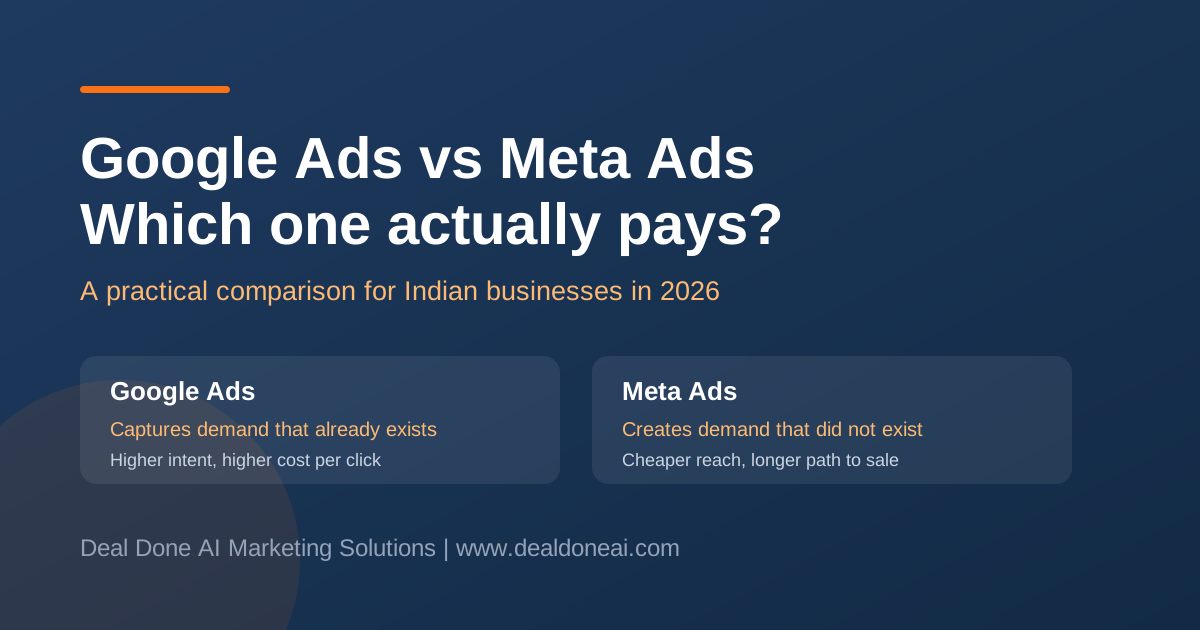
Every month someone asks us the same question: should I put my money into Google Ads or Meta Ads? And almost every month, the honest answer annoys them a little - because it depends on something they have not thought about yet.
The two platforms are not competitors doing the same job at different prices. They solve opposite problems. Google finds people who are already looking for you. Meta finds people who would want you if they knew you existed. Pick the wrong one for your situation and you will burn through a budget concluding that 'online ads do not work for my business'.
This guide gives you the actual numbers we see across Indian accounts, the situations where each platform wins, and a simple test to decide which one deserves your first rupee.
Table of contents
- The fundamental difference
- Real costs in India
- When Google Ads wins
- When Meta Ads wins
- The decision framework
- Running both together
- Mistakes that waste money on each
- Frequently asked questions
The difference that decides everything
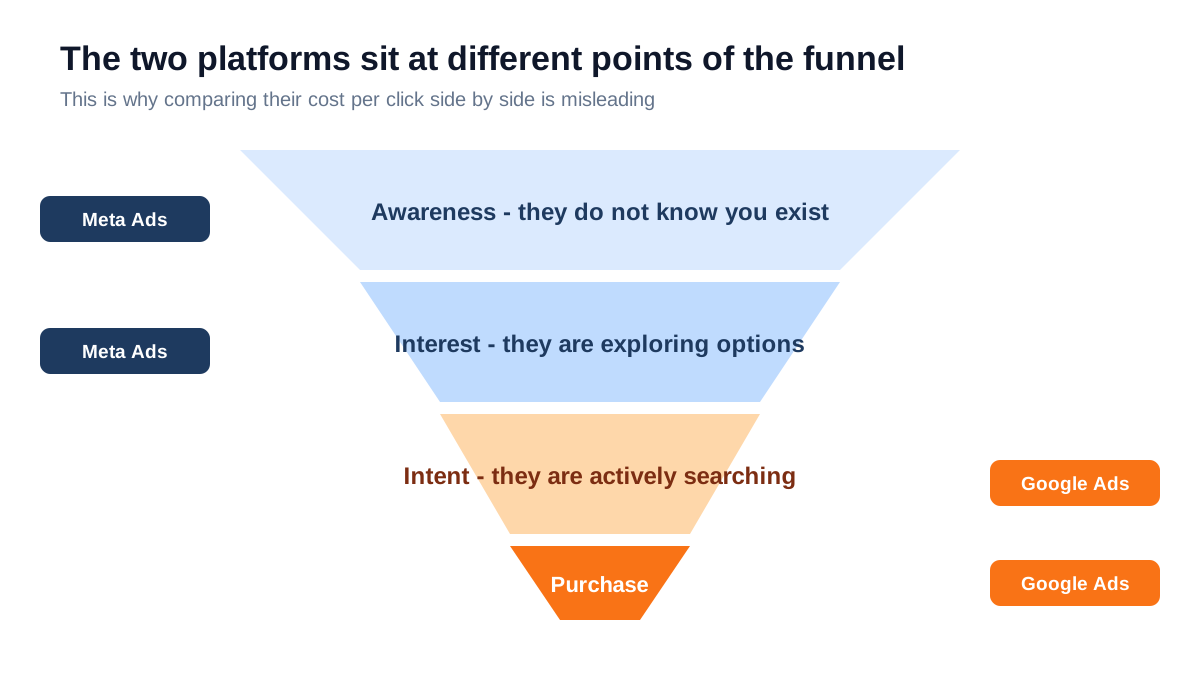
Google Ads is demand capture. Somebody types 'AC repair near me' at 11pm because their air conditioner has died. They have a problem right now and they are looking for someone to solve it. Your ad appears. The intent was already there - you simply showed up.
Meta Ads is demand creation. Nobody opens Instagram thinking 'I should find a new curtain supplier today'. They are scrolling through holiday photos. Your ad interrupts that, and if the creative is good enough, it plants a want that did not exist ninety seconds ago.
That single difference explains almost every result you will ever see from these platforms.
It explains why Google clicks cost three to six times more than Meta clicks - you are bidding against competitors for someone with their wallet already out. It explains why Meta needs far better creative - you have to earn attention that was never offered. And it explains why comparing their cost per click is close to meaningless.
What they actually cost in India
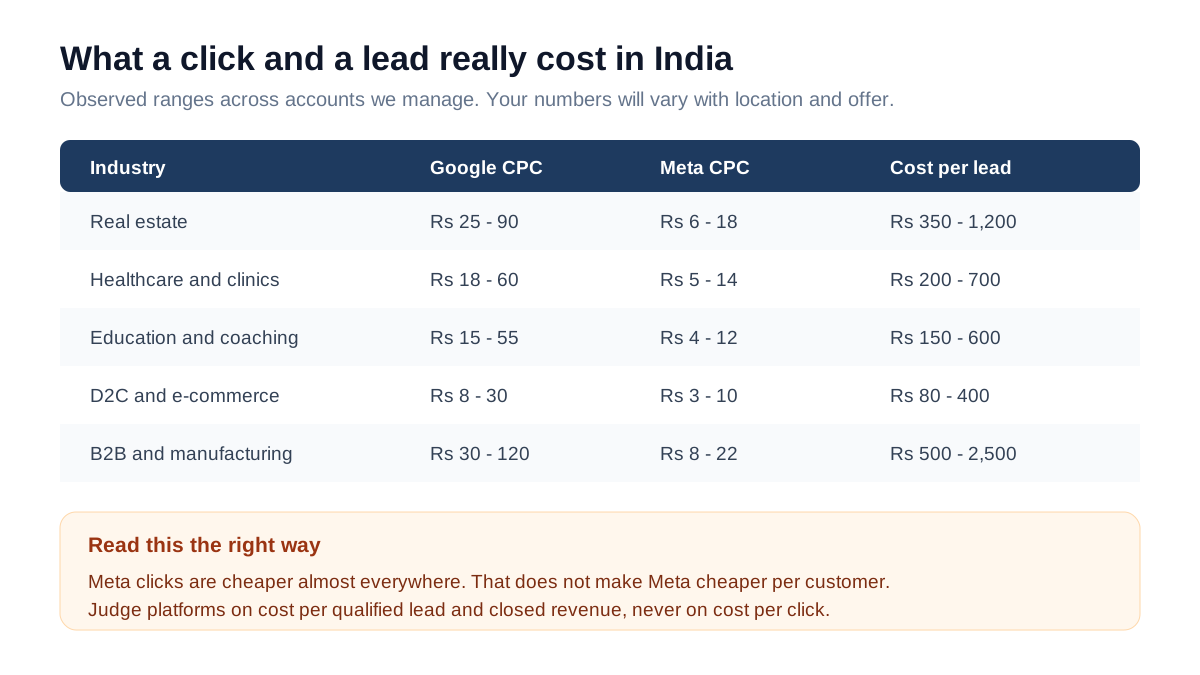
Numbers first, then what to do with them. These ranges come from accounts we manage across categories - yours will land somewhere inside them depending on city, competition and how good your landing page is.
A worked example makes the point better than the table does.
A Kanpur dental clinic spends Rs 20,000 on each platform in the same month.
Google: CPC Rs 35, so about 570 clicks. Landing page converts 6%, giving 34 enquiries. Of those, 20 book an appointment. Cost per booking: Rs 1,000.
Meta: CPC Rs 8, so about 2,500 clicks. Same page converts 1.8% because these visitors were not looking for a dentist, giving 45 enquiries. Only 12 book. Cost per booking: Rs 1,667.
Meta produced more clicks and more raw enquiries. Google produced more patients at a lower cost per patient. If the clinic had judged this on cost per click or even cost per lead, it would have reached exactly the wrong conclusion.
Now change one variable. Suppose the clinic launches teeth whitening - a service almost nobody in Kanpur searches for by name. Google has nearly no search volume to buy. Meta, with a good before-and-after video, becomes the only viable channel. Same business, same month, opposite answer.
When Google Ads is the obvious choice
Fund Google first if most of these are true:
- People already search for what you sell using recognisable terms
- Your service solves an urgent or scheduled problem - repairs, medical, legal, travel, admissions
- Your average order value comfortably absorbs a Rs 30-100 click
- You are competing on availability and trust rather than on desire
- You have a landing page that answers the exact search
Categories where Google reliably wins in India: clinics and diagnostics, home services (plumbing, electrical, pest control, AC), legal and CA services, coaching institutes during admission season, B2B industrial suppliers, packers and movers, and anything with the word 'emergency' or 'near me' attached to it.
The reason is simple - when someone searches, they have already decided they need the thing. You are not persuading them to want it, only to choose you. That is a much cheaper argument to win. Our Google Ads service is built around exactly that: capturing existing demand before a competitor does.
When Meta Ads is the obvious choice
Fund Meta first if most of these are true:
- Your product is visual and improves when people can see it
- Nobody searches for your category by name because it is new or niche
- Your price point allows impulse or short-consideration purchases
- You have strong creative - photos, video, before-and-after, real customers
- You are selling to consumers rather than procurement teams
Categories where Meta reliably wins in India: fashion and jewellery, D2C food and wellness products, restaurants and cafes, gyms and fitness studios, event and wedding services, interior design, real estate at the awareness stage, and any new product category that has not yet entered people's vocabulary.
Meta also has one advantage Google cannot match: targeting people who have never heard of you but look exactly like the customers you already have. Upload your customer list, build a lookalike audience, and you are advertising to strangers with the buying profile of your best clients. For a young brand with no search volume, that is the fastest way to find a market. That is the core of how we approach Meta Ads campaigns.
A simple way to decide
If you want one test rather than a checklist, use this: open Google Keyword Planner and check whether anyone searches for what you sell.
If your main service gets meaningful monthly searches in your city, start with Google. The demand is already there and somebody is currently collecting it. If searches are close to zero, no amount of Google budget will conjure them - you need Meta to create the demand first.
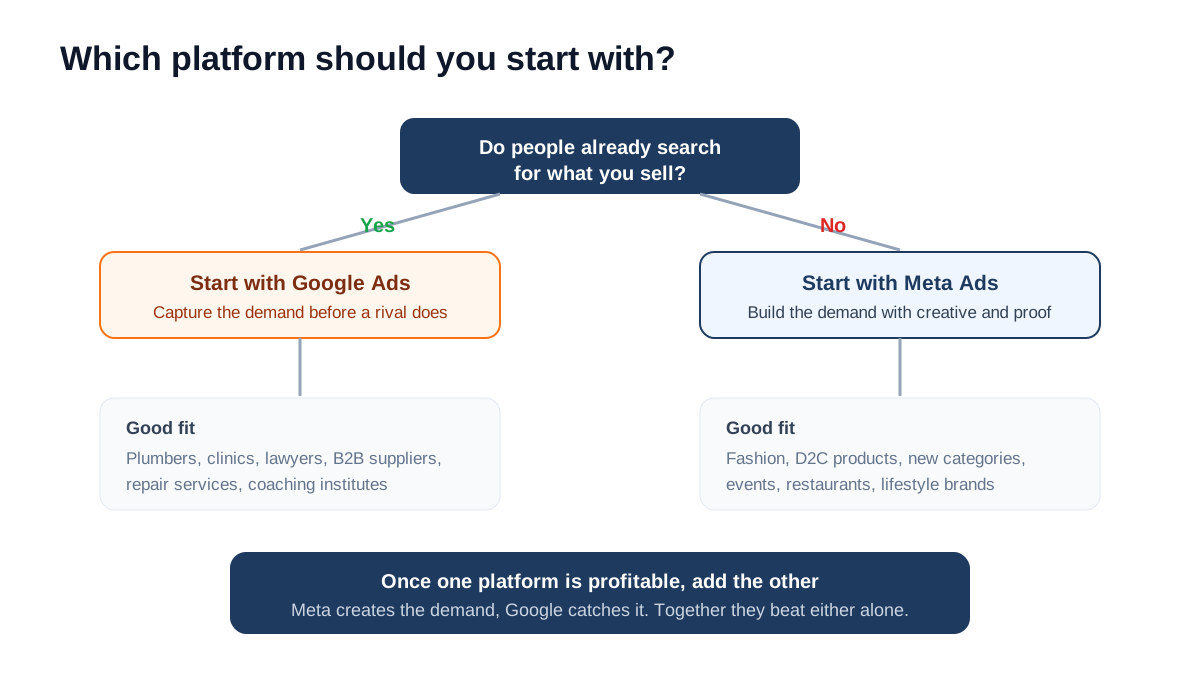
There is a second, blunter test for businesses with tight budgets: which platform can you feed properly? Splitting Rs 20,000 across both usually produces two underperforming campaigns instead of one working campaign. Below roughly Rs 30,000 a month in ad spend, pick one, get it profitable, then expand.
How they work together once you can afford both
The businesses getting the best returns are rarely using one platform. They are using both, in a specific order, because the platforms feed each other.
Here is the pattern that works:
- 1Meta introduces you. Video and carousel ads to a cold audience build recognition. Most of these people will not buy today - that is expected and fine.
- 2Search demand rises. Two to six weeks later, some of those people search your brand name or category. This shows up as a quiet increase in branded search volume in Search Console.
- 3Google catches them. Your search campaign picks them up at the moment of intent, at a low cost per click because branded terms are cheap.
- 4Retargeting closes the gap. People who visited but did not convert see follow-up ads on both platforms.
We consistently see branded search volume climb four to eight weeks after a Meta awareness campaign starts. Businesses that only measure last-click attribution credit all of that to Google and conclude Meta did not work - then switch it off and watch Google's performance quietly deteriorate a month later.
If you turn Meta off and Google gets worse, Meta was working. It just was not getting the credit.
The mistakes that waste money on each platform
Google Ads mistakes
- Broad match with no negative keywords. A packers-and-movers client was paying Rs 60 a click for 'movie packers' and 'free moving boxes'. Six weeks, about Rs 40,000, zero enquiries. A negative keyword list fixed it in an afternoon.
- Sending every ad to the homepage. If the ad says 'root canal treatment', the page should be about root canals - not a general clinic homepage. This single change routinely doubles conversion rate.
- No conversion tracking. Without it, Google optimises for clicks instead of customers. Roughly a third of the accounts we audit have tracking either missing or broken.
- Panicking in week one. New campaigns need two to four weeks of data before the numbers mean anything. Restructuring on day three resets the learning and guarantees poor results.
Meta Ads mistakes
- Running one creative for months. Meta creative fatigues fast in India - typically two to four weeks. When cost per result creeps up while everything else is unchanged, it is almost always fatigue.
- Boosting posts instead of building campaigns. The boost button is the most expensive button on the internet. It gives you almost no control over objective, placement or audience.
- Audiences that are too narrow. Stacking six interests down to 20,000 people starves the algorithm. Meta's targeting works better with room to learn - start broad and let it find the pattern.
- Optimising for the wrong event. If you optimise for link clicks you will get cheap clicks from people who never convert. Optimise for leads or purchases, even though the reported cost looks higher.
The numbers to watch on each platform
Dashboards on both platforms show dozens of metrics, most of which do not matter. These are the ones that tell you whether something is working, and roughly what healthy looks like for an Indian account.
On Google Ads
- Search impression share - the percentage of eligible searches where your ad appeared. Below 40% usually means your budget or bids are limiting you, and you are handing searches to competitors. Google tells you which of the two it is.
- Click-through rate - 4-8% is healthy on a well-matched search campaign. Under 2% normally means your ad copy does not match the search, not that the keyword is bad.
- Quality Score - aim for 7 or above. Every point below that is a bid premium you pay on every click, forever.
- Conversion rate from click to enquiry - 3-8% depending on category. If clicks are good and this is poor, the problem is your landing page, not your campaign.
- Search terms report - read it weekly for the first two months. This is where you find the money being wasted, and it is the single highest-value half hour in the whole account.
On Meta Ads
- Hook rate - the share of people who watch past the first three seconds of a video. Under 25% means the opening is not stopping the scroll, and nothing downstream can rescue it.
- Frequency - how many times the average person has seen your ad. Above 3-4 in a short window is where fatigue sets in and cost per result climbs.
- Cost per result trend, not the daily number. Meta's daily figures swing wildly. Judge on a rolling seven-day view.
- Creative-level performance. Meta is a creative platform. Compare ads against each other, not campaigns against campaigns - the winner is almost always a creative decision.
One habit separates accounts that improve from accounts that plateau: reading the search terms report on Google and the creative breakdown on Meta, every single week. Almost nobody does it consistently.
A 90-day plan for whichever you pick
Most campaigns fail from impatience rather than from strategy. Here is a sequence that gives either platform a fair chance.
Days 1-14 - build and instrument. Set up conversion tracking first and verify it fires correctly with a test enquiry. Build a landing page that matches the campaign, not a generic homepage. Launch with a tight structure: on Google, two or three ad groups with closely related keywords; on Meta, one campaign with three or four distinct creative angles. Resist the urge to change anything for the first two weeks - you are buying data, not results.
Days 15-45 - cut and concentrate. Now you have enough signal to act. On Google, add negative keywords aggressively from the search terms report and pause keywords with spend but no conversions. On Meta, kill the creatives that lost and produce three new variations of the one that won. Move budget towards whatever is producing enquiries rather than clicks. Expect your cost per lead to drop noticeably in this window - that drop is the whole point of management.
Days 46-90 - scale what works. Increase budget on proven segments in steps of about 20% rather than doubling, which resets learning. Add retargeting now that you have enough site traffic to build audiences from. Start testing a second offer or a second service. By day 90 you should know your cost per enquiry, your enquiry-to-customer rate, and therefore your true cost per customer - the only number that decides whether to keep going.
If after ninety honest days the cost per customer exceeds what a customer is worth, the answer is not more budget. It is a different offer, a better landing page, or the other platform.
Why your numbers will not agree with the platform's
At some point you will notice Meta claiming 40 conversions while your CRM shows 12. This is normal, and understanding why saves a lot of arguments.
Meta reports view-through and click-through conversions across a long window, crediting itself when someone saw an ad and converted a week later through any route. Google reports last-click within its own ecosystem. Neither is lying; they are answering different questions, and both are counting things the other ignores.
The practical fix is to stop treating platform dashboards as your source of truth. Use them to compare campaigns *within* one platform, where the methodology is at least consistent. Use your own CRM or lead sheet - where every enquiry is logged with its source - to compare *between* platforms and to calculate real return.
This is also why we push clients to connect enquiries into a CRM rather than leaving them in an inbox. When every lead carries a source and a final outcome, the platform argument disappears and you can simply see which channel produced revenue.
Frequently asked questions
Which is cheaper, Google Ads or Meta Ads?
Meta is cheaper per click in almost every Indian category - often by four to six times. Google is frequently cheaper per acquired customer, because the traffic converts at a much higher rate. Compare cost per closed sale, not cost per click.
What is a realistic starting budget for each?
For a local business, Rs 15,000 to Rs 25,000 a month on Google Ads, or Rs 10,000 to Rs 20,000 a month on Meta. Below Rs 10,000 the campaign never exits the learning phase and the data stays too thin to optimise on.
How long before ads start working?
You will see clicks on day one and enquiries within the first week if the setup is right. Real efficiency takes four to six weeks, because that is how long it takes to gather enough conversion data to cut what is not working.
Can I run ads myself instead of hiring someone?
Yes, and for a simple single-service local campaign it is genuinely worth learning. It gets harder fast once you add multiple services, retargeting, and conversion tracking across a website. The usual tipping point is around Rs 30,000 a month in spend - past that, the waste from a self-managed account tends to exceed a management fee.
Do Meta Ads still work in India in 2026?
Yes, but the bar has risen. Cheap stock-image ads that worked five years ago are ignored now. What works is native-looking video, real customers, and creative refreshed every few weeks. Businesses that treat Meta as a creative channel do well; those that treat it as a placement channel struggle.
Should I use Performance Max or Advantage+ campaigns?
They can work well once you have conversion data and clean feeds, and badly when you have neither. For a new account with no history, start with standard search campaigns on Google and manual audience testing on Meta. Move to automated formats after you have a few hundred conversions to teach them with.
The bottom line
Google Ads and Meta Ads are not rivals. They are two different tools, and the question is not which is better - it is which problem you have.
If people are already searching for what you sell, start with Google and collect the demand that exists today. If they are not, start with Meta and build the demand yourself. Once one channel is profitable, add the other, and measure them as a system rather than as competing line items.
The businesses that struggle are almost always the ones that split a small budget across both, judge everything by cost per click, and switch platforms every six weeks before either has a chance to work.
Not sure which one fits your business?
Tell us what you sell and where, and we will tell you honestly which platform to start with - including when the answer is 'neither yet, fix your website first'.
You can see how we structure and price both channels on our Google Ads and Meta Ads service pages, compare full plans on the packages page, or simply message us for a straight recommendation.