
How to Run Google Ads and Meta Ads Together (Instead of Choosing)
'Google or Meta?' is the question we get asked most often about paid advertising, and it is the wrong question for most businesses that ask it.
The two platforms are not competing products. Google captures demand that already exists - somebody typed what they want into a search box. Meta creates demand that did not exist - somebody was scrolling and now knows you exist. Asking which is better is like asking whether a business needs a salesperson or a shopfront.
If you are genuinely choosing between them because you can only afford one, our side-by-side comparison sets out where each one wins. This guide is about the more common situation: you can run both, and nobody has told you how to divide the money or sequence the work.
What's in this guide
- 1The job each platform actually does
- 2Which one to start with
- 3Where to start the budget split
- 4The loop that makes both cheaper
- 5Sequencing the first ninety days
- 6Reading the numbers honestly
- 7What each platform needs from you
- 8Mistakes when running both
- 9When to shift the split
- 10A worked example: a furniture manufacturer
- 11Frequently asked questions
The job each platform actually does
The clearest way to see it is as a funnel with two suppliers.
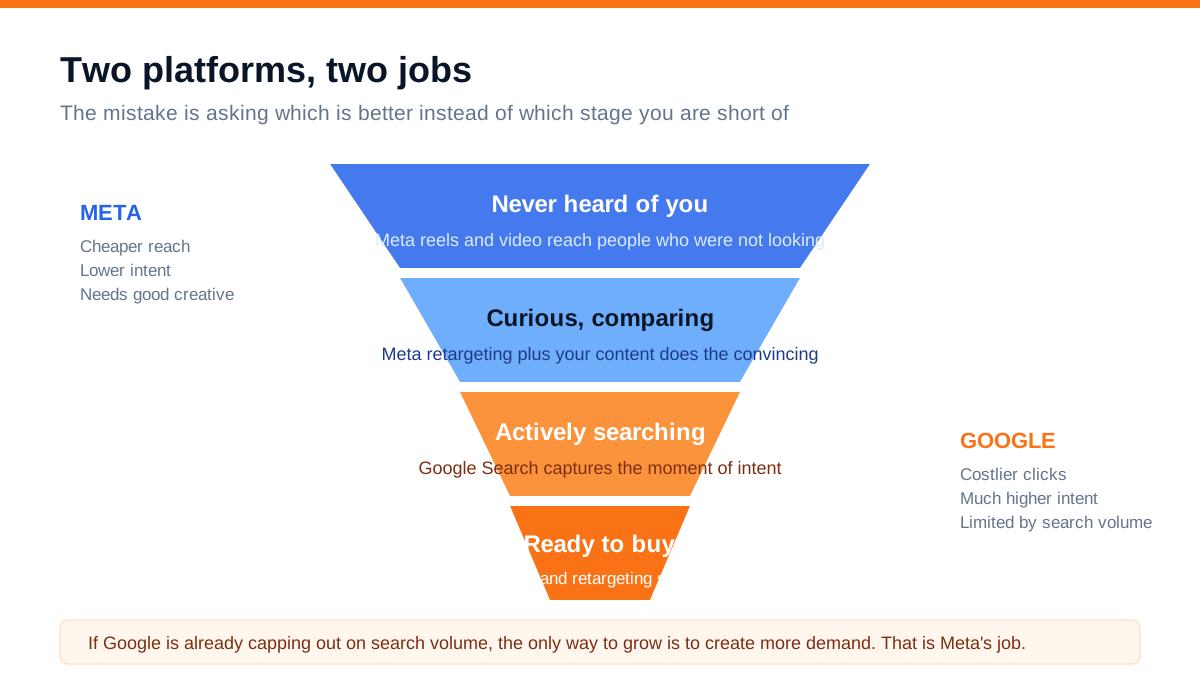
Meta - Facebook and Instagram - works at the top. People are not looking for you. You interrupt them with something interesting, and a share of them become aware, then curious. Reach is cheap; intent is low. Performance depends almost entirely on creative.
Google Search works at the bottom. Someone typed 'modular kitchen dealer near me'. They are ready. Clicks cost far more; intent is far higher. Performance depends on keywords, negatives and the landing page rather than on creative flair.
This produces a practical diagnostic. If your Google campaigns are profitable but you cannot spend more because you have exhausted the search volume, you do not have a Google problem - you have a demand problem, and only something like Meta fixes that. Conversely, if Meta produces plenty of interest that never converts, you may be missing the capture step at the bottom.
Ask which stage you are short of, not which platform is better.
Which one to start with
If you are starting from zero and cannot launch both at once, the sequence matters.
Start with Google Search if people already search for what you sell. Almost every established service and product category qualifies. You get enquiries within days, and you learn which search terms convert - information that then makes your Meta creative far better, because you know what people actually care about.
Start with Meta in three situations: your category is new or unfamiliar so nobody searches for it, your product is visual and impulse-driven, or Google search volume in your area is genuinely tiny.
Start with neither if your Google Business Profile is incomplete, your website is slow, or enquiries currently wait a day for a reply. Advertising into those conditions buys expensive disappointment. Fix them first; it takes a week and lowers your cost per customer on every channel afterwards.
One practical note: run Meta's tracking pixel on your website from day one even if you are not advertising on Meta yet. It costs nothing and it quietly builds the retargeting audience you will want in month three. Businesses that install it late lose months of data they cannot recover.
Where to start the budget split
There is no universal ratio, but there are sensible starting points by how people buy from you.
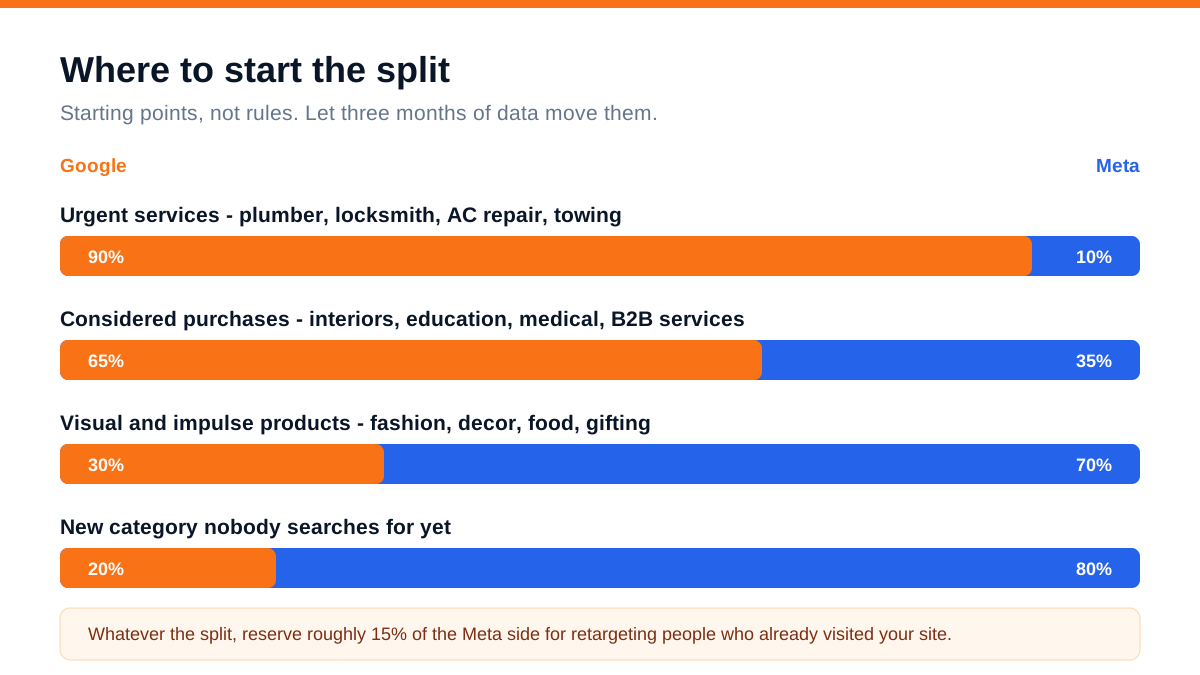
Urgent services - roughly 90% Google. Plumbers, locksmiths, AC repair, towing. Nobody sees a reel and decides to remember you for when their pipe bursts. They search, at the moment of need.
Considered purchases - roughly 65% Google, 35% Meta. Interiors, education, medical, most B2B services. People search when ready, but the decision takes weeks and Meta keeps you present during it.
Visual and impulse products - roughly 30% Google, 70% Meta. Fashion, decor, food, gifting. Discovery drives these categories and search volume is thin relative to demand.
A new category - roughly 20% Google, 80% Meta. If nobody knows your product exists, nobody is searching for it. You have to create the demand before you can capture it.
Whatever the split, reserve about 15% of the Meta side for retargeting people who already visited your website. It is consistently the cheapest converting audience in either account, and it is the piece most small businesses skip.
Minimum viable budgets matter too. Below roughly Rs 15,000 a month per platform you will struggle to gather enough data to optimise anything. If your total budget is under Rs 20,000, run one platform properly rather than two badly.
The loop that makes both cheaper
This is the actual argument for running both, and it is invisible in single-platform reporting.
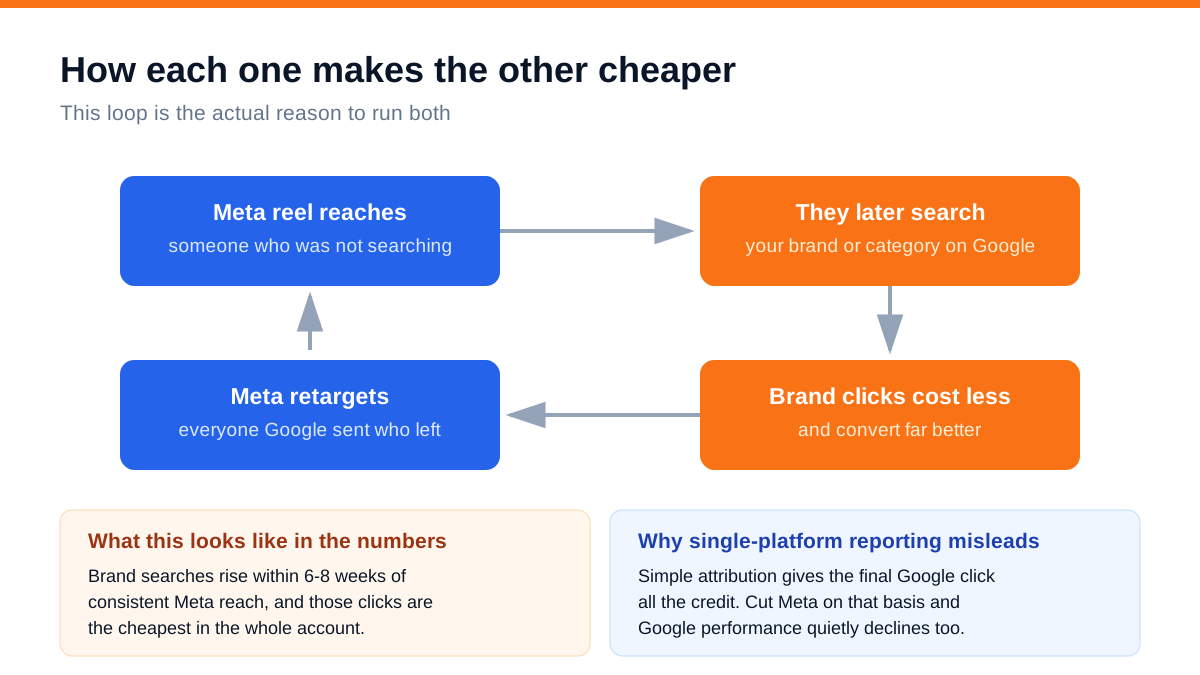
Someone sees your reel on Instagram. They do not click. Three weeks later they need what you sell and search your brand name on Google - a click that costs a fraction of a competitive keyword and converts several times better. Meanwhile, Meta retargets everyone Google sent to your site who left without enquiring.
Two things follow from this:
Brand search volume is a Meta performance metric. If your branded searches are rising six to eight weeks into consistent Meta reach, Meta is working, even if its own dashboard looks unimpressive.
Cutting Meta on last-click attribution quietly damages Google. Simple attribution gives the final Google click all the credit, so Meta looks marginal and gets cut - and then Google's performance declines over the following two months, for reasons nobody connects to the decision.
The practical safeguard: before cutting a platform, pause it for three weeks and watch what happens to the other one. If the other one gets worse, they were working together.
Sequencing the first ninety days
A workable order when launching both.
Weeks 1-2. Install both tracking pixels. Fix landing page speed. Launch Google Search on your five to eight highest-intent keywords only - exact and phrase match, with a solid negative keyword list from day one. Do not launch broad match; that is how Google Ads budgets get wasted.
Weeks 3-4. Let Google gather data. Add negatives from the search terms report twice a week - this is the single highest-value recurring task in a new account. Begin producing Meta creative: three to five variations, ideally short video.
Weeks 5-8. Launch Meta with a cold audience campaign and a small retargeting campaign for site visitors. Keep the cold audience broad; over-narrow targeting starves the system of the data it needs. Meanwhile Google should be stabilising - expand to more keywords only where the existing ones are converting.
Weeks 9-12. Now you have data on both. Shift budget towards whichever is producing cheaper genuine enquiries, refresh Meta creative - it fatigues within four to six weeks - and add a Google campaign targeting your own brand name, which by now should be getting searched more than before.
The most common sequencing error is launching both on day one with untested creative and untested keywords. You then cannot tell what is failing, and you conclude that paid advertising does not work.
Reading the numbers honestly
Compare the two platforms on the same terms or the comparison is meaningless.
- Judge on cost per genuine enquiry, not cost per click or per lead form. Meta lead forms are cheap and often produce people who tapped by accident. A Meta enquiry at Rs 200 and a Google enquiry at Rs 700 are not comparable until you know how many of each became real conversations
- Track to customers, not enquiries. Ask every customer how they found you, imperfect as that is. In our experience Google's advantage on quality is usually larger than the platforms' own numbers suggest
- Use a longer attribution window for considered purchases. A seven-day window on a product with a six-week decision cycle will systematically undervalue Meta
- Watch brand search volume as the leading indicator for Meta
- Look at blended cost per customer - total ad spend divided by total new customers - alongside the platform figures. It is the number that actually matters to the business
- Compare quarterly. Monthly comparisons on small budgets are noise, and reacting to noise produces constant strategy changes
What each platform needs from you
They fail for different reasons, and knowing which failure you are looking at saves months.
Google needs precision. A tight keyword list, an aggressive negative keyword list, ad copy that matches the search, and a landing page that delivers what the ad promised. It does not need beautiful imagery. Most failing Google accounts are failing on negatives and landing pages.
Meta needs creative. New material every four to six weeks, because performance decays as your audience sees the same thing repeatedly. It needs the first two seconds to stop a scroll, and it needs enough audience size to optimise. Most failing Meta accounts are failing on creative volume and over-narrow targeting.
Both need the same thing at the end: a fast page, a clear offer, and somebody answering the enquiry within the hour. Neither platform can compensate for a business that takes a day to reply.
Mistakes when running both
- Splitting a small budget in half. Two underfunded accounts learn nothing. Under Rs 20,000 total, pick one
- Using the same creative on both. Google Search is text and intent; Meta is visual and interruption. Repurposing between them wastes the strength of each
- No retargeting. The cheapest audience you have is people who already visited. Skipping it is the most common avoidable waste in a two-platform setup
- Judging Meta on last-click. Covered above, and it is expensive
- Changing both at once. If you adjust both accounts in the same week, you cannot attribute the result to either. Change one thing at a time
- Letting creative go stale. The same three Meta images for six months is a guaranteed decline that gets blamed on the algorithm
- Ignoring the search terms report. Weekly, without fail. It is where wasted Google spend hides
When to shift the split
Review quarterly and move budget for reasons, not feelings.
Move towards Google when Meta enquiries are not converting to customers, when your search impression share shows you are missing available demand, or when you are entering a busy season where intent is already high.
Move towards Meta when Google is profitable but capped by search volume, when your cost per click on Google has been climbing for two quarters, when you are launching something people do not yet search for, or when your retargeting pool has grown large enough to be worth working properly.
Move nothing for at least a full quarter after any significant change. Paid platforms need time to stabilise, and constant reallocation is itself a cause of poor performance.
A worked example: a furniture manufacturer
A furniture manufacturer selling to homes and offices, average order about Rs 62,000, running Rs 55,000 a month entirely on Google Ads. Google was working - roughly 78 enquiries a month at Rs 705 each, converting to 14 orders - but had plateaued. Increasing the budget only raised cost per click; there simply were not more people searching in their area.
We moved Rs 18,000 to Meta while reducing Google to Rs 37,000 - a reduction the client was nervous about.
Month 1. Google produced 61 enquiries at Rs 690, and 11 orders. Meta produced 44 enquiries at Rs 410, but only 2 orders. On the surface Meta looked poor and Google looked worse than before.
Month 3. Meta creative had been refreshed twice and retargeting was running. Google enquiries were back to 74 despite the lower budget, because branded searches had risen sharply and those clicks were cheap. Meta was producing 51 enquiries and 6 orders.
Month 6. Total spend unchanged at Rs 55,000. Combined: 168 enquiries and 29 orders a month, against 14 before. Blended cost per customer fell from about Rs 3,930 to Rs 1,900.
The interesting part is what the dashboards said. Meta's own reporting credited itself with 9 of the 29 orders. Google's credited 22 - more than the total, because both claimed overlapping conversions. Neither number was the truth. The only reliable figure was the blended one, and it had halved.
Before you decide which platform is working, pause one for three weeks and watch the other. If the other one gets worse, you were never running two campaigns - you were running one system.
Frequently asked questions
Should I run Google Ads or Meta Ads first?
Start with Google Search if people already search for what you sell, which covers most established categories - you get enquiries within days and you learn which search terms convert. Start with Meta if your category is new, your product is visual and impulse-driven, or local search volume is very low. Start with neither if your site is slow or enquiries go unanswered for a day.
How should I split my budget between Google and Meta?
As starting points: roughly 90% Google for urgent services, 65:35 towards Google for considered purchases, 30:70 towards Meta for visual and impulse products, and 20:80 towards Meta for a category nobody searches for yet. Reserve about 15% of the Meta side for retargeting site visitors, and let three months of your own data move the ratio.
What is the minimum budget to run both platforms?
Roughly Rs 15,000 a month per platform is where you can gather enough data to optimise. Below a total of about Rs 20,000, run one platform properly rather than splitting it - two underfunded accounts produce no usable learning on either side.
Why does Meta look worse than Google in my reports?
Usually because of last-click attribution. Meta creates awareness that shows up later as a branded Google search, and simple attribution gives that final Google click all the credit. Check whether your branded search volume rose after Meta started, and use a longer attribution window if your customers take weeks to decide.
How often should I change my Meta ad creative?
Every four to six weeks. Meta performance decays as the same audience sees the same material repeatedly, and this is the most common reason accounts decline without any change in targeting or budget. Google ad copy is far more stable and can run for months without refreshing.
Can Google Ads and Meta Ads cannibalise each other?
Not meaningfully - they reach people at different stages. What they do is double-count conversions, so each platform's dashboard claims credit for the same customer. That is why blended cost per customer, calculated from total spend and total new customers, is the only figure worth managing against.
Where to start
If you are running only one platform today, install the other's tracking pixel this week even if you have no plans to advertise there yet. It is free and it builds the audience you will want in three months.
If you are running both, work out your blended cost per customer - total spend divided by total new customers - and compare it against what each dashboard claims. The gap between those numbers is usually the most useful thing you will learn this quarter.
Our Google Ads and Meta Ads services cover both sides, including the retargeting layer most accounts are missing, and the packages page shows what management costs. If you want a view on how your current split is performing, share your numbers and we will tell you what we would move first.